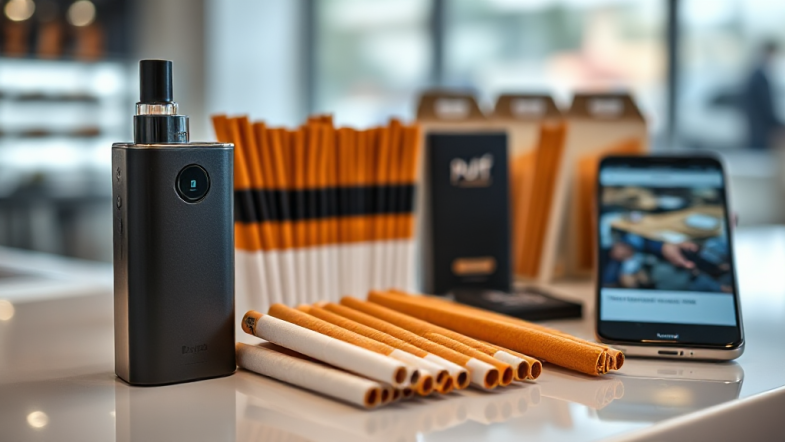
Tobacco Sticks Explained: What They Are and How HNB Works
A tobacco stick is a small, precisely manufactured cartridge of processed tobacco that is inserted into a handheld heating device, where it is warmed to a controlled temperature rather than burned, releasing a nicotine-containing aerosol that the adult user inhales. That single sentence is the definition most people are missing, and it is the reason so much everyday conversation about heat-not-burn products goes sideways. Ask a friend to explain the difference between a tobacco stick, a cigarette and a vape, and you will usually get a shrug, a vague gesture, and a reference to “one of those electric things.” The confusion is understandable, because the category sits between two products that most people already know: combustible cigarettes on one side, and e-liquids on the other. Once you separate the three clearly, the whole HNB world becomes much easier to follow, and shopping for it stops feeling like guesswork. If you want to see how the category is actually presented to European buyers, a good starting point is https://puff-eu.com, where heat-not-burn devices and sticks are sold side by side.
What a Tobacco Stick Actually Is
Strip away the branding and a tobacco stick is a short, cigarette-shaped object with three main parts: a tobacco plug, a hollow filter or mouthpiece section, and a wrapper that holds the whole thing together. The tobacco inside is real tobacco, usually a blend that has been cut, processed and sometimes reconstituted into a sheet before being shaped into a plug. It is not a liquid, it is not a gel, and it does not contain the vegetable glycerin and propylene glycol base that defines an e-liquid. It is tobacco, prepared specifically so that it releases flavour and nicotine at a lower temperature than a burning cigarette.
The dimensions matter more than they look. Tobacco sticks are engineered to fit a specific device’s heating chamber with very little tolerance, which is why a stick designed for one brand of holder often will not fit another. Length, diameter, wrapper material and even the density of the tobacco plug all affect how evenly heat travels through the stick. That is also why sticks are sold in sealed packs rather than loose: moisture content changes how they perform, and a dry stick tastes harsh while an over-damp one produces weak aerosol.
A common misconception is that a tobacco stick is just a cigarette with the fire removed. Functionally there is a grain of truth in that, because both deliver nicotine from tobacco. But the engineering is completely different. A cigarette is designed to burn at several hundred degrees Celsius at the tip, generating smoke, tar and carbon monoxide as by-products of combustion. A tobacco stick is designed to be heated to a much lower range, typically somewhere in the region of 200 to 350 degrees Celsius depending on the device, so that the tobacco is warmed and volatilised rather than burned.
How Heat-Not-Burn Devices Work
An HNB device, sometimes called a heated tobacco holder or a heat-not-burn kit, is the hardware half of the equation. Most modern devices fall into one of two heating styles. The first is a blade or pin system: a thin heating element is inserted directly into the tobacco plug when you push the stick into the chamber, so heat comes from inside the stick outward. The second is an oven or cavity system: the walls of the chamber heat up and warm the stick from the outside in. Both approaches aim for the same result, which is an even release of aerosol without any combustion taking place.
The user experience is deliberately ritualistic. You charge the device, insert a stick, press a button or simply draw to activate the heater, and then use the stick for a set number of puffs or a set duration, usually a few minutes. When the session ends, the device signals it, and you remove the used stick. The stick does not turn to ash. It comes out as a darkened, compressed plug that you dispose of in a normal bin. There is no lighter, no ashtray, and no lingering smell of burnt paper in the way a cigarette leaves behind.
This is where HNB products genuinely diverge from vaping, and it is the single most useful distinction to hold onto. A vape heats a liquid until it turns into vapour. There is no tobacco leaf in the cartridge at all. An HNB device heats actual tobacco leaf. So the input material is different, the temperature curve is different, and the resulting aerosol is different in composition. Someone who has tried vaping and disliked the taste of e-liquid may find the tobacco-forward character of a heated stick much closer to what they were used to.
Because the hardware and the consumable are a matched pair, buyers generally need to think about both at once. Device families have their own stick ranges, and the practical questions are about compatibility, battery life, charging time, cleaning routine and how many sessions you get per charge. These are the details that separate a device you enjoy using daily from one that ends up in a drawer.
Why the Shop Category Exists at All
If tobacco sticks are just tobacco, why do they need their own retail category? The answer is regulation and logistics. In Europe, heated tobacco products are treated as a distinct product class, separate from combustible cigarettes and separate from e-cigarettes. That means they have their own packaging rules, their own health warnings, their own advertising restrictions and their own age-verification requirements. A retailer cannot simply shelve them next to cigarettes and hope for the best.
There is also a supply-chain reason. Sticks are consumables with a short shelf life relative to hardware, and adult users go through them steadily. A person who buys a device once will buy sticks repeatedly, which makes the consumable the real recurring purchase. That is why specialist shops exist: they can stock the full range of stick variants across multiple device families, keep them fresh, and make sure the device you already own has a matching consumable available. A general retailer with a token HNB shelf cannot do that reliably.
For European buyers, cross-border availability is the other driver. Not every stick variant is distributed in every country, and stock moves around. A specialised online shop solves that by aggregating ranges and shipping across borders. This is the practical role that a store such as Puff EU plays: it exists precisely because the category has its own rules, its own consumables cycle, and its own delivery expectations.
It is worth being clear about what these shops are not. They are not selling a smoking cessation medicine, and they should not be described as one. They are retail channels for adult tobacco and nicotine consumers who have chosen a heated tobacco product instead of a combustible cigarette. Whether that choice reduces harm relative to smoking is a scientific and regulatory question, and it is not something a shop decides. The shop’s job is narrower and more honest: stock the right products, verify age, take payment securely and deliver promptly.
Common Misconceptions Worth Clearing Up
The first misconception is that HNB is just vaping with a different name. It is not. Vaping involves no tobacco leaf; HNB involves tobacco leaf that is heated rather than burned. The two categories have different consumables, different devices, different regulations and different user rituals. Treating them as interchangeable leads people to buy the wrong thing.
The second is that a heated stick is safe in the way a non-tobacco product would be. It is not a harmless product. It contains nicotine, which is addictive, and it delivers nicotine from tobacco. The relevant comparison is between heated tobacco and continued smoking, not between heated tobacco and fresh air. Adult consumers deserve that framing rather than marketing language that blurs it.
The third is that all sticks fit all devices. They do not. Compatibility is brand-and-family specific, and buying the wrong stick range is the most common beginner error. Before ordering, check which device you own and which stick lines that device supports.
The fourth is that the used stick is somehow still burning after you remove it. It is not. There is no ember, no ash and no smouldering. The stick is warm and darkened, and it goes in the bin once it has cooled. This is also why HNB devices tend to leave far less residue on furniture and clothing than cigarettes do.
The fifth misconception is about flavour. People often assume that because the product is tobacco-based, every stick tastes the same. In practice, stick ranges vary considerably, from plain tobacco profiles to menthol-influenced and other flavoured variants, and the flavour experience depends heavily on the device’s heating profile. Two devices heating the same stick can produce noticeably different results.
What to Check Before You Buy
Buying heated tobacco online is straightforward once you know what to verify. Start with device compatibility, because it determines everything else. Identify the exact model of your holder or kit, then look for the stick lines that model supports. If you are buying a device and sticks together for the first time, choose a starter combination that the retailer lists as compatible rather than assembling parts from different families.
Next, check the consumable details: pack size, stick count per pack, and whether the listing describes the flavour profile clearly. Because sticks are perishable in a practical sense, freshness matters, and a retailer that moves volume will generally have fresher stock than one that does not.
Then look at the commercial and compliance side. A legitimate European retailer will require age verification, will state its delivery coverage and timelines, and will offer secure payment methods. Fast delivery within Europe and protected checkout are not luxuries in this category; they are the baseline expectations of an adult buyer who wants the order to arrive promptly and the payment details to stay safe. You can see how these elements are presented in practice at https://puff-eu.com, which covers devices, sticks, European delivery and secure payment in one place.
Finally, be realistic about running costs. The device is a one-off purchase; the sticks are the ongoing expense. Work out roughly how many sticks you use in a week, multiply that across the pack sizes on offer, and compare the total against what you currently spend. That single calculation tells you more about whether HNB fits your routine than any specification sheet.
Frequently Asked Questions
Is a tobacco stick the same as a cigarette?
No. Both contain tobacco and deliver nicotine, but a cigarette is burned at high temperature, producing smoke, ash and tar. A tobacco stick is heated at a much lower controlled temperature inside a device, so there is no combustion, no ash and no ember. The stick comes out darkened and is disposed of in a bin.
Can I use a tobacco stick in a vape?
No. Vapes are designed to heat e-liquid, not solid tobacco. A tobacco stick requires a heat-not-burn device with a chamber built to hold and heat the stick. Putting a stick in a vape will not work and may damage the device.
Do all tobacco sticks fit all HNB devices?
No. Sticks are manufactured to fit specific device families, and dimensions vary between brands. Always check which stick lines your exact device model supports before ordering, otherwise you risk buying a pack that will not seat properly in the heating chamber.
Why do heated tobacco products have their own shop category?
Because they are regulated as a distinct product class in Europe, separate from cigarettes and from e-cigarettes. That means dedicated packaging, health warnings, age verification and advertising rules. Specialist shops exist to stock compatible devices and fresh consumables across brands and to deliver them across borders.
What should I check first when buying online?
Start with device compatibility, then pack size and flavour profile, then the retailer’s age verification, delivery coverage and payment security. After that, estimate your weekly stick usage so you understand the ongoing cost rather than just the upfront price of the device.